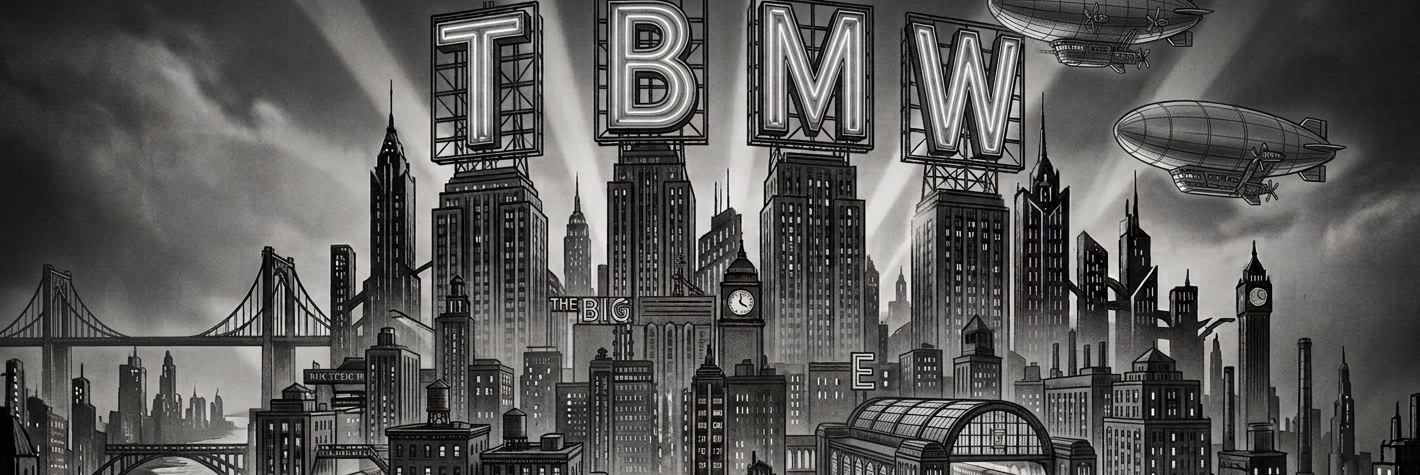

TORONTO — During the 2010s, winning an NBA championship seemingly required a rigid formula: construct a top-heavy superteam around a high-salaried trio and fill the margins with minimum-contract veterans and unproven young players. Yet, when evaluating the Toronto Raptors 2019 championship run in hindsight, they ignored that meta entirely.
While rival franchises chased star, Masai Ujiri, now with the Dallas Mavericks, built a roster that operated suspiciously like a modern second apron contender. In reality, the overall 2019 Toronto Raptors legacy has aged like fine French wine because Toronto was simply half a decade ahead of its time. Analyzing the 2019 Raptors roster reveals a masterclass that mirrors how elite front offices navigate today’s deep, restricted league landscape.
Operating Like a Modern Second Apron Contender
In the current CBA era, punitive financial aprons prevent teams from stacking three max-salaried superstars without completely gutting their depth. Modern contenders are forced to rely on a more balanced model: one or two focal stars, battle-tested veterans on mid-tier deals, and underpaid developmental talent on rookie-scale contracts.
When examining the 2019 Raptors roster, Toronto accidentally pioneered this exact framework during an era defined by top-heavy superteams:
- Primary Star: Kawhi Leonard functioned as the solitary max-level superstar, operating with high usage without suffocating the secondary playmakers.
- Mid-Tier Veteran Anchors: Marc Gasol, Serge Ibaka, and Kyle Lowry provided high-IQ defense, playmaking and everything in-between. They occupied key cap slots without capping the team’s ability to make deals.
- Rookie-Scale Value Pipeline: Pascal Siakam, Norman Powell, and Fred VanVleet provided elite two-way production while earning rookie-scale wages or value extensions. OG Anunoby missed the entire playoffs after he had emergency appendectomy surgery just days before the postseason started.
While rival teams starved their benches to pay three max contracts, Toronto loaded up on eight legitimate starter-caliber players. The resulting depth of the 2019 Raptors gave Nick Nurse endless tactical flexibility, establishing a blueprint that modern front offices are now forced to adopt.
Unprecedented Secondary Talent in an Expanded League
As the modern NBA features deeper overall talent across 30 markets, the secondary pieces from that title team look even more absurd in hindsight. Toronto did not rely on high lottery prospects to build out its rotation. Instead, internal player development elevated late-round assets into high-level stars, ensuring the 2019 Toronto Raptors legacy would age impeccably well:
- Pascal Siakam (27th Overall): Developed from a raw energy forward into an Eastern Conference ECF MVP with Indiana during their 2025 Finals run.
- OG Anunoby (23rd Overall): Matured into an elite wing, carrying the New York Knicks through the 2026 NBA Finals with a 28-point performance in Game 3. Who can forget his game winner?
- Fred VanVleet (Undrafted): Rose from a backup point guard to an All-Star floor general and is now a leader for the Houston Rockets.
- Norman Powell (46th Overall): Evolved from an unheralded seventh man into an All-Star reserve for the Miami Heat in 2026, averaging over 21 points per game.
Having four future All-Stars and high-level starters executing secondary roles gave Toronto a distinct depth advantage. When evaluating the Raptors 2019 championship run through a modern lens, it becomes clear that Toronto did not just win a isolated title—they provided an early preview of how championship basketball would look in a deeper, cap-restricted NBA.
The Legacy of Ahead-of-Its-Time Depth
Beyond the cap mechanics, the veteran core ensured that Toronto’s forward-thinking translated directly to playoff execution. Lowry controlled tempo, while Gasol and Ibaka formed a defensive platoon capable of turning the rim into a no-fly zone. Combined with Leonard’s all-time brilliance, Toronto possessed the perfect blend of championship poise and young athleticism.
Seven years later, as present-day front offices struggle to build deep rosters under second apron rules, Toronto’s lone championship looks less like an anomaly and more like a visionary blueprint. The 2019 Raptors proved that depth and versatility trump top-heavy super teams. Ultimately, history will record that championship run as a masterclass from a franchise that was operating in the future while the rest of the league was stuck in the past.
Find me on X: @f_rederic_k

[…] DeRozan has started 1,252 of his 1,264 career NBA games. Outside of his 2009-10 rookie season in Toronto where he came off the bench 12 times, he has been an unquestioned, high-usage starter for 17 […]