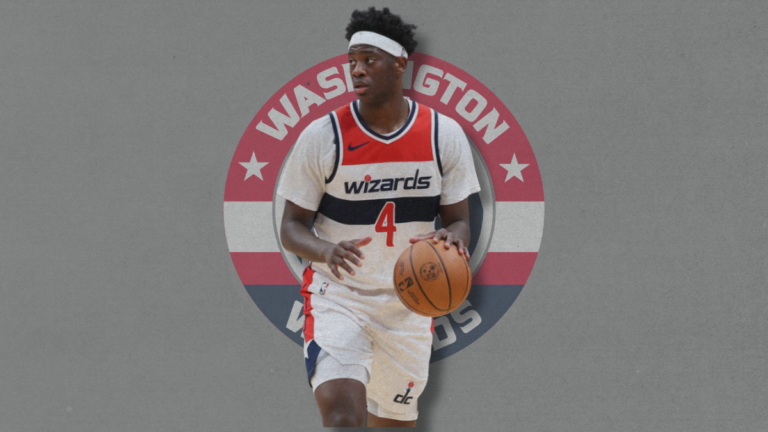


OKLAHOMA CITY — As the October 19 rookie scale extension deadline rapidly approaches, general manager Sam Presti finds himself at the center of a high-stakes financial game of musical chairs. Following a breakout campaign where he earned NBA All-Defensive Second Team honors, combo guard Cason Wallace has officially opened contract extension discussions with front office management. The Cason Wallace $25M AAV Thunder negotiations signal a major commitment to youth while creating a massive long-term financial domino effect across the roster. According to a report by Marc Stein and Jake Fischer of The Stein Line, the framework for these negotiations is already taking shape:
”Sources say talks between Wallace’s camp and the Thunder have begun in the $25 million range in average annual value. Can Wallace ultimately secure a new contract that pays more than $25 million annually? How far shy will the pact ultimately land compared to Keyonte George’s new five-year, $158 million deal in Utah? Sources say those are key questions to be resolved in these final negotiation stages.”
While securing a 22-year-old defensive menace at $25 million per year appears to be a major win on paper, the cascading financial realities on the Thunder Cap tell a far more complicated story. Committing that level of baseline salary to Wallace signals an impending roster crunch that could force an imminent exit for veteran guard Alex Caruso.
The Unforgiving Second Apron Math Facing Sam Presti
To understand why paying Wallace $25 million annually creates a domino effect across the roster, one must examine the broader multi-year salary obligations facing Sam Presti, President of basketball ops. The Oklahoma City Thunder are currently sitting at $214.2 million in active payroll for the 2026-27 season, placing them $5.76 million over the first apron hard cap threshold.
However, the real financial storm arrives in 2027-28. That is the second year of max extensions for Chet Holmgren ($44.5 million) and Jalen Williams ($44.5 million), alongside Shai Gilgeous-Alexander’s supermax bump to $61.6 million. Stacking those three massive payroll slots with Isaiah Hartenstein’s $25 million commitment means four players alone will gobble up over $175 million in cap space.
Under second apron tax rules, exceeding the second apron threshold carries devastating roster-building penalties. Teams lose the ability to aggregate salaries in trades, cannot send cash considerations, lose access to trade player exceptions, and have their future first-round draft picks frozen and moved to the end of the draft order. Adding a $25 million AAV extension for Wallace guarantees that Sam Presti must shed significant money to keep one way or another to keep the core intact.
Why Cason Wallace $25M AAV Thunder Value Makes Alex Caruso Expendable
The immediate tactical casualty of this financial pinch is veteran swingman Alex Caruso. Heading into the season, Caruso represents a vital veteran voice in Mark Daigneault’s defense. However, Caruso is scheduled to earn $20.9 million in 2027-28 entering his age-33 campaign.
When analyzing long-term positional overlap, carrying both Caruso and Wallace at roughly $46 million combined annually is a luxury the Oklahoma City Thunder simply cannot afford under the current CBA. Wallace offers nearly identical point-of-attack harassment, possessing elite lateral agility, secondary playmaking chops, and is a whole decade younger than Caruso.
By pushing Wallace’s average annual value to $25 million, Oklahoma City is pricing in Caruso’s eventual decline. Rather than letting Caruso’s $20.9 million contract push the team into deeper second apron penalties, the front office is positioning Wallace as his direct successor. This dynamic makes Caruso a prime candidate to be moved in a salary-balancing trade before his contract becomes a tax liability.
Managing the Secondary Rookie Scale Crunch
The downstream impact on the Thunder Cap extends beyond the primary rotation. Oklahoma City currently maintains 21 players under contract, including rookie scale deals for Nikola Topic ($7.4 million option), Jared McCain ($6.7 million option), Aday Mara ($6.8 million), and Thomas Sorber ($5.1 million).
In previous years, the Oklahoma City Thunder could comfortably digest multiple first-round salaries while operating below the luxury tax line. Under the current collective bargaining agreement, however, keeping four secondary rookie contracts alongside a $200 million core five creates an untenable luxury tax bill.
When a team pays its top five players over $200 million, every single dollar assigned to roster spots 8 through 15 carries exponential tax multipliers. Extending Wallace forces management to prioritize which young guards earn real minutes, likely turning fringe blue-chip prospects into trade sweeteners to consolidate roster spots.
The Reality of Championship Roster Maintenance
Securing elite two-way talent requires making uncomfortable decisions. Wallace’s growth into an All-Defensive guard validated Oklahoma City’s draft evaluation, but paying market rate for elite role players comes with explicit trade-offs.
As negotiation deadlines close in, extending Wallace at $25 million annually represents the definitive boundary line for Oklahoma City’s cap structure. The Oklahoma City Thunder are proving they will pay whatever it takes to lock in elite prospects, even if it means sacrificing high-priced veterans like Alex Caruso to navigate the secondary apron.
Find me on X: @f_rederic_k