
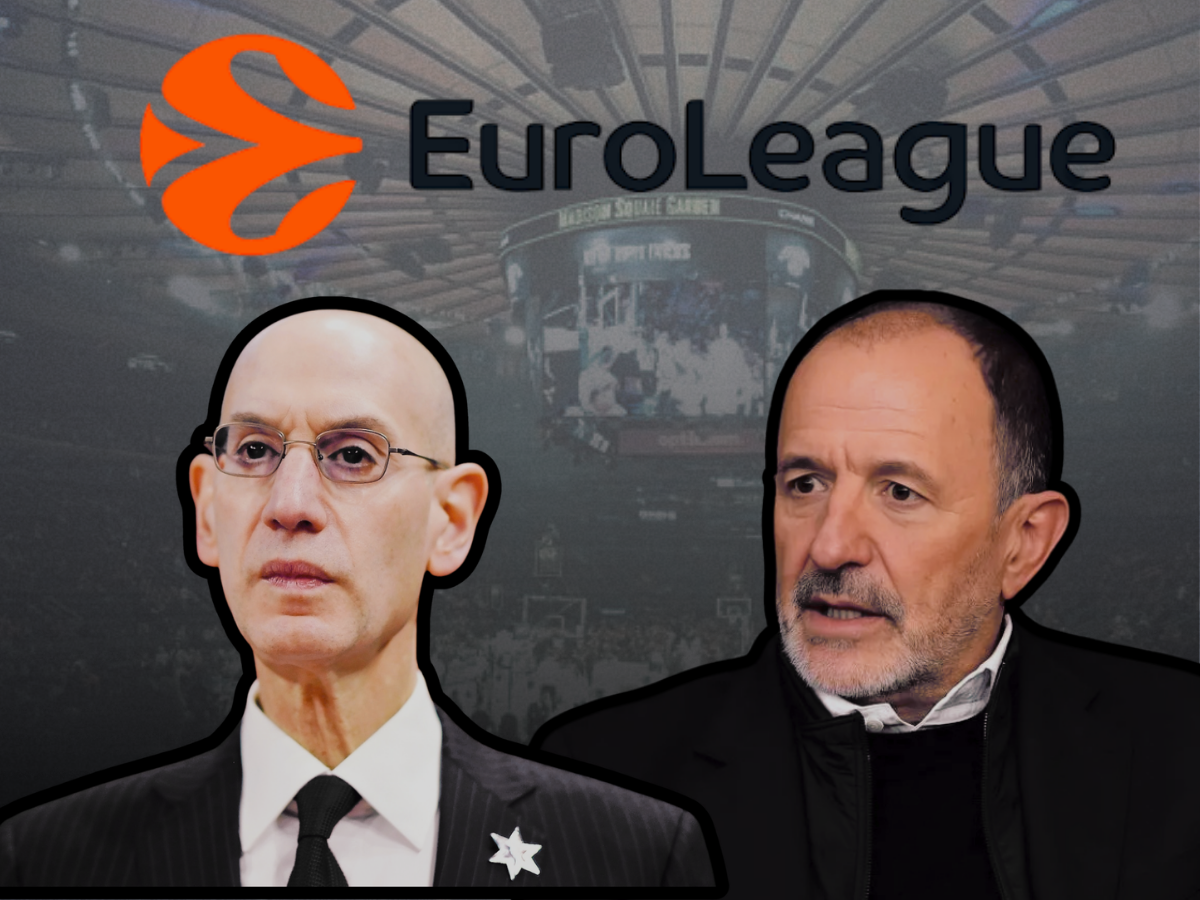

CERNOBBIO, Italy — The high-stakes battle for the future of European basketball has reached a dramatic boiling point. What was intended to be a discreet exploratory summit in Cernobbio, Italy, has instead triggered an open rebellion among club owners, dominating recent EuroLeague basketball news headlines. At the center of the storm is the formal NBA Europe proposal presented by league executives to the 13 equity-shareholder clubs. Rather than unifying the continent’s elite under a lucrative global banner, the presentation ignited intense ideological resistance, dividing traditional powerhouses into opposing factions. Greek publication SDNA originally broke the story.
The Cernobbio Summit Collapses into Chaos over NBA Europe Proposal
The private gathering in Lake Como was meant to evaluate the long-term framework outlined by NBA Commissioner Adam Silver and other NBA Europe strategists. Instead, the meeting exposed deep mistrust between legacy clubs and the NBA. Reports indicate that representatives from FC Barcelona and Olympiacos Piraeus were among the most vocal critics, labeling the proposed terms an “unacceptable joke” and describing the league’s top-down approach as “colonialist.”
This fierce pushback represents a significant roadblock for the league, shaking up the landscape of EuroLeague basketball news. The dissenting clubs argue that the proposed commercial valuation severely undervalues the historical equity, passionate fanbase, and local broadcast rights built by European clubs over decades. By demanding control while offering limited profit-sharing guarantees, the framework has alienated key decision-makers who view the venture as an American corporate takeover rather than a genuine partnership.
Boardroom Feuds and the Spanish-Greek Divide
The rift has created a fascinating geopolitical divide across the European basketball map. While Barcelona and Olympiacos have taken an aggressive stance, vehemently rejecting the current terms of the EuroLeague NBA proposal, other shareholder clubs are choosing a far more calculated approach. Reports suggest that key executives within the Real Madrid hierarchy, alongside Panathinaikos and Bayern Munich, favor keeping dialogue open.
This internal rift highlights the division between Barcelona and Real Madrid representatives, proving that even bitter domestic rivals cannot agree on how to handle American expansion. Proponents of continued talks believe that outright rejection is shortsighted. They argue that the global marketing muscle, corporate sponsorship network, and media distribution capabilities associated with the NBA Europe initiatives could unlock unprecedented revenue streams for basketball clubs that currently operate at consistent financial losses.
American Capital Meets European Tradition
The fundamental friction governing these negotiations stems from two irreconcilable business models. European sports clubs traditionally operate within open pyramid systems rooted in local domestic competition and sporting meritocracy. Conversely, the blueprint introduced in the EuroLeague NBA proposal relies on closed-market franchise mechanics, permanent licensing, and centralized revenue generation.
For critics across the continent, adopting a single-entity commercial structure threatens to dilute the cultural identity of domestic leagues. That concern is precisely why the vision of Adam Silver and his NBA Europe expansion is facing resistance from traditionalists who fear becoming feeder markets for a corporate product. The differing commercial priorities for Real Madrid decision-makers and their Mediterranean counterparts underline how difficult it will be to reach a unanimous shareholder consensus.
The Looming Threat of an Independent Launch
As negotiations around the NBA Europe proposal reached a stalemate in Cernobbio, NBA League officials quietly signaled that alternative paths remain on the table. If shareholder clubs refuse to integrate under a unified commercial umbrella, the NBA possesses the financial backing and institutional weight to launch an independent European league structure by 2027.
This possibility remains the primary talking point in EuroLeague basketball news analysis. An independent expansion attempt would force clubs into a direct competition for broadcast rights, sponsorship dollars, and marquee talent. For now, the strategic patience shown by Real Madrid executives reflects a desire to maximize leverage before any final deadline, while hardline opponents prepare for an extended political battle.
The long-term viability of the EuroLeague and the NBA proposal depends on whether both sides can bridge the gap between European tradition and American commercial expansion. With momentum stalling, the coming months will determine whether European basketball enters a new era of global integration or descends into an all-out war for market control.
Find me on X: @f_rederic_k