
DALLAS — Let’s be honest: keeping up with modern NBA roster mechanics feels a bit like trying to solve a Rubik’s Cube while riding a unicycle. Between rigid tax penalties and endless cap aprons, keeping a contender together requires real basketball gymnastics. But if you strip away all the collective bargaining algebra, one thing becomes remarkably clear—the Dallas Mavericks future is in far better shape than national media narratives suggest.
That sentiment took a bit of a hit recently when ESPN dropped their latest rankings evaluating every franchise’s three-year outlook, sparking plenty of heated debate across hoops Twitter. While national analysts might be lukewarm on the timeline—fretting over cap gymnastics or draft assets—their skepticism misses the forest for the trees. A closer look under the hood reveals that the foundation in Dallas is significantly sturdier than those national projection models suggest.
Here is a breakdown of 5 major reasons why the Mavericks future remains one of the brightest in the Western Conference.
Stockpiling the League’s Most Valuable Commodity: Frontcourt Length
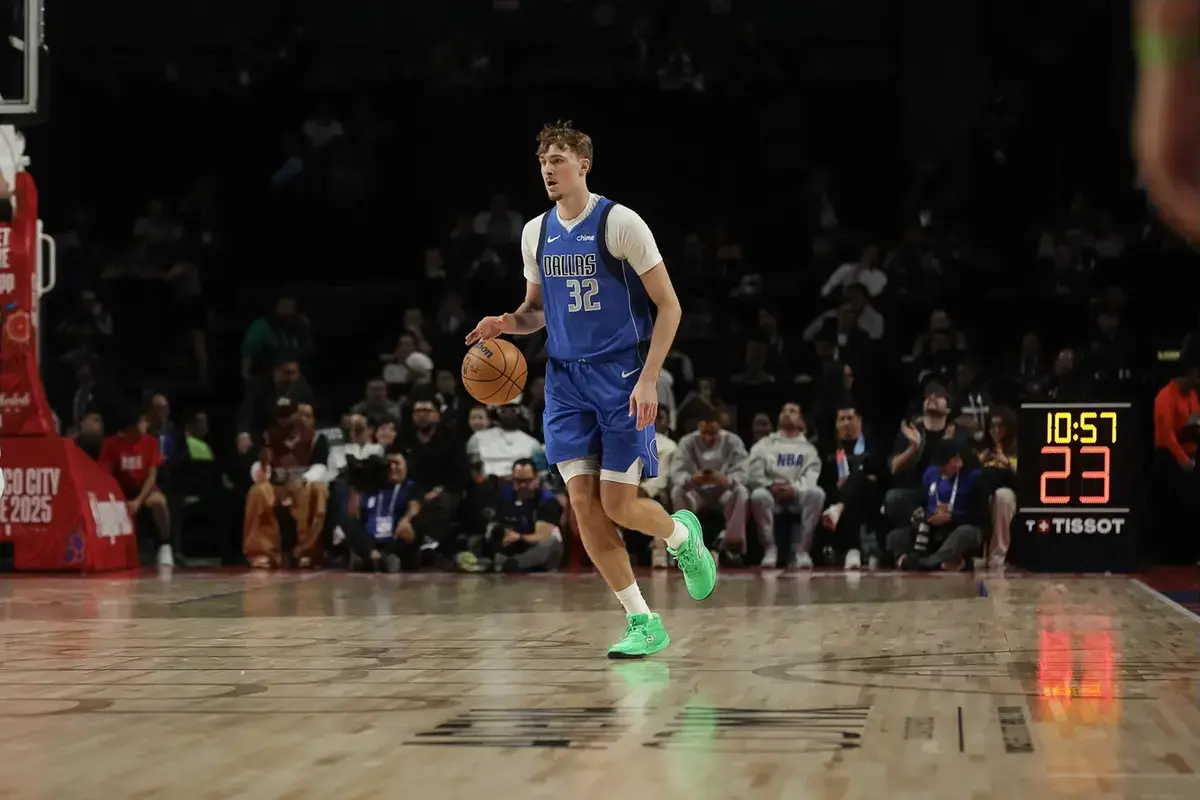
In today’s positionless NBA, size is no longer a luxury; it is the currency of elite basketball. Dallas has intentionally stockpiled hyper-versatile, length-heavy frontcourt weapons capable of switching seamlessly across multiple positions, protecting the rim, and stretching the floor, led by reigning rookie of the year, Cooper Flagg.
Having length across every position elevates the versatility of the Mavericks roster, giving them defensive coverage and matchup flexibility that few teams in the Western Conference can match. Frontcourt size deters drives, controls the glass, and provides insulation against hyper-athletic perimeter stars.
The Masai Ujiri Advantage that Shapes the Mavericks Future
With Masai Ujiri guiding front-office strategy, Dallas possesses one of the most formidable basketball minds in the league. Ujiri is universally recognized across rival front offices as a notoriously tough negotiator who rarely, if ever, loses a transaction.
More importantly, Ujiri holds immense social currency and league-wide respect. That pedigree allows Dallas to extract as many assets as possible in trade talks. Whether leveraging rival desperation or engineering multi-team blockbusters, Ujiri’s presence ensures that Dallas will command premium returns on every asset they put into the market.
Dual-Timeline Roster Construction
Dallas has established a balanced dual timeline. Veterans like Kyrie Irving and Daniel Gafford anchor the top of the rotation, while a stable of high-upside young talents ensures long-term sustainability.
This dual-track setup ensures the Mavericks future remains bright without forcing a complete tear-down which is important since they don’t control their first rounders until 2031. Younger players continue to develop in competitive environments, increasing both depth and external market value.
Contract Moveability: The Ultimate Weapon Under the Second Apron
In this punitive apron world, a player’s value is no longer dictated solely by raw box-score output. Instead, a player’s worth is heavily weighted by how moveable and team-friendly his contract is. Teams flirting with the second apron cannot afford bloated, untradeable salaries that lock them into stagnation.
We saw a clear example of this thinking process when the Clippers traded center Ivica Zubac to the Pacers. Part of the primary reason the Clippers were able to command such a trade haul was Zubac’s ultra-palatable contract—a three-year, $58.6 million extension averaging roughly $19.5 million in AAV (Average Annual Value). In an environment where starting centers frequently command cap-clogging figures, Zubac’s team-friendly annual value made him an irresistible, highly moveable commodity.
Dallas has mastered this exact balance. Every tier of the Mavericks roster features players locked into clean, moveable contracts that function as plug-and-play contributors or trade chips for future moves.
Cap Cushion and Financial Maneuverability
Under the current collective bargaining agreement, mismanaging the NBA salary cap can freeze a franchise’s draft capital and strip away trade exceptions. Dallas has deliberately engineered its cap sheet to retain vital financial cushion.
By steering clear of the severe trade restrictions and draft pick freezes associated with the second apron, Dallas maintains critical trade flexibility. Front-office restraint and strategic structure have insulated Dallas against the harsh penalties built into the salary cap, providing them with a distinct advantage over rival contenders burdened by restrictive aprons.
Synergy with Dusty May’s System
Roster construction is only as good as the system designed to deploy it. Head coach Dusty May brings a fast-paced, high-IQ, motion-heavy framework that perfectly amplifies frontcourt length and athletic wings.
May’s system emphasizes rapid decision-making, defensive switchability, and living in transition. That synergy allows the Mavericks roster to seamlessly transition between half-court execution and transition play, maximizing player production and keeping contract values high.
The Bottom Line
Managing a franchise in today’s era is a masterclass in risk mitigation under the NBA salary cap. While rival front offices face looming luxury tax penalties and immovable contracts, Dallas has quietly assembled a versatile, rangy squad managed by a top-tier executive.
By blending moveable contracts, elite length, and high-level front-office execution, the Mavericks future is far more secure—and dangerous—than national discourse acknowledges.
Find me on X: @f_rederic_k